
BFF: Make Friends & Meet Up
Geneva Technologies, IncLifestyle
4.5840.00 Reviews
- Version
- 3.1.29.5253
- Installs
- 500.00K
- Age Rating
- Everyone
Screenshots
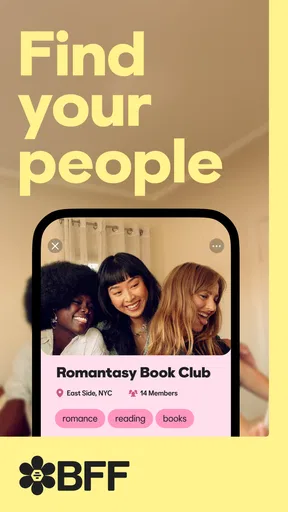
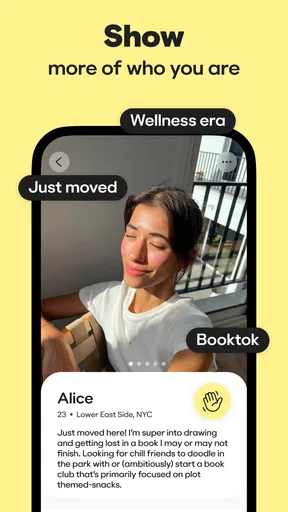
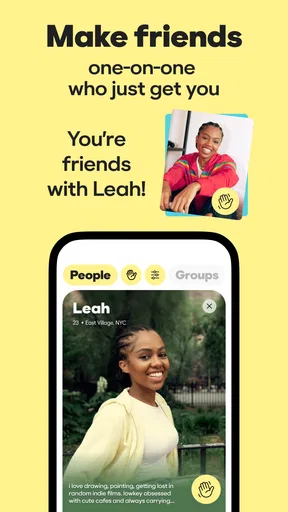
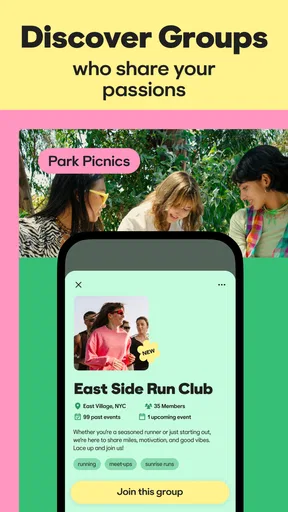
Our Review of BFF: Make Friends & Meet Up
 Analysis by Appyee
I approached BFF: Make Friends & Meet Up as a practical way to meet people rather than as another endless matching feed. Its focus is friendship, nearby groups, and events where conversations can move from a screen into real life. That makes it interesting for someone who has recently moved, works remotely, studies in a new place, or simply wants a social routine that does not depend on already knowing the right people.
My overall impression is positive, but conditional. The app is most useful when I treat it as a starting point for finding compatible social situations, not as a guarantee that every profile or event will feel trustworthy. I liked the clear friendship-first purpose, the free entry point, and the emphasis on meeting through shared activities. At the same time, any service that helps strangers connect nearby deserves a slower, more deliberate approach from the user.
What BFF is really trying to solve
BFF belongs to the lifestyle side of mobile apps, and Geneva Technologies, Inc develops it for Bumble. It is free, aimed at Everyone, and has built a substantial audience, with over 500 thousand installs and an average rating of 4.5 from around 3 thousand ratings. Those figures suggest that the concept is easy to understand and useful to a meaningful number of people, although popularity alone should not be confused with personal safety or guaranteed friendship.
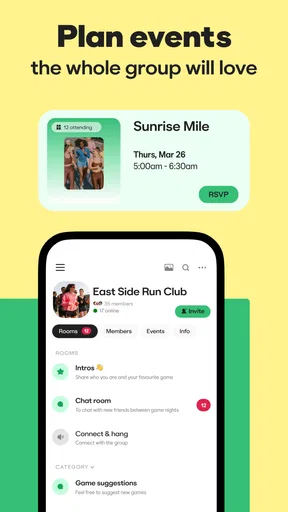
The central idea is simple: find people nearby through groups and events, then use those shared settings to make meeting less awkward. That distinction matters. Traditional social networks are usually organized around existing contacts, while dating apps often make one-to-one matching the main activity. BFF sits between those habits. It offers a more intentional route to platonic connections, especially for people who would rather join a conversation about an activity than open with a cold message.
In my experience, the strongest part of this approach is the social context. A group or event gives me something to discuss before I have to reveal much about myself. That can be a better fit for a quiet person than a blank chat window. It also makes the app more useful for people who want recurring social contact, not just a list of possible acquaintances.
There is an important trade-off, though. A friendship app can help me discover opportunities, but it cannot manufacture chemistry, reliability, or a shared schedule. A group may look appealing and still not suit my pace or interests. I would therefore use BFF to widen my options while keeping expectations modest. The goal should be one promising conversation or one comfortable activity, not an instant best friend.
Where it fits beside familiar alternatives
Compared with general social networks, BFF gives friendship a more direct purpose. On a large network, I may see plenty of people but have no natural reason to contact them. Here, the surrounding context is more relevant to meeting new people. Compared with dating-oriented services, the friendship framing can reduce confusion about what kind of connection I am seeking.
It is also different from relying on local clubs, community boards, or messaging groups. Those alternatives may offer deeper information about a particular activity, while BFF is more convenient when I am still exploring what kind of social circle I want. A local club can be better when I already know my hobby and want a stable membership. BFF is better suited to the earlier stage, when I need to discover possible groups and events.
I would skip it if I strongly prefer private, established communities or if I do not want to interact with people I have not met before. Someone looking for professional networking, formal volunteering, or a highly structured class may get more value from a specialized service. BFF makes the most sense for casual friendship-building, particularly when shared activities feel easier than direct introductions.
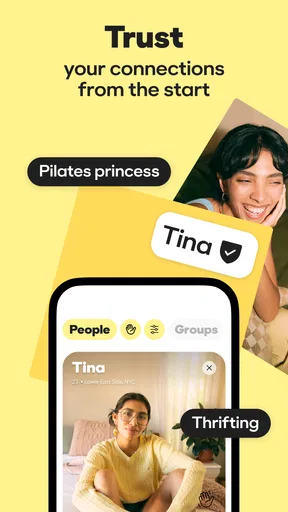
Trust starts with what the app lets me control
When I assess an app like this, I look first at visible choices rather than assuming that a friendly design makes the service safe. The useful questions are practical: Can I decide how much personal information to share? Can I choose whether to continue a conversation? Can I avoid moving immediately to a private meeting? Can I leave an interaction that feels wrong?
BFF is easier to use responsibly when I treat every profile, group, and event as an invitation rather than an obligation. I do not need to disclose my full routine, workplace, exact home location, or other identifying details simply because a conversation has started. Keeping early messages focused on the activity itself gives me a way to judge compatibility without exposing too much too soon.
The app’s friendship purpose also creates a useful boundary. I can explain clearly that I am looking for platonic connections and shared activities. That will not prevent every uncomfortable interaction, but it gives me a straightforward standard for deciding whether a conversation belongs in my social life. If someone repeatedly pushes past that boundary, I would stop engaging rather than trying to persuade them.
One practical habit makes a noticeable difference: I would review my profile as if I were a stranger. A photo taken outside my home, a highly specific job description, or a schedule that reveals when I am always away can disclose more than intended. A profile can remain warm and approachable without becoming a map of my life. This is one of the less obvious advantages of taking time before joining groups; I can prepare what I want to share instead of improvising under social pressure.
Using groups and events without rushing the trust decision
The group-and-event structure is the feature I find most valuable, but it also requires judgment. A public activity with several attendees is a different situation from meeting one unfamiliar person alone. I would begin with something that has a clear purpose, a visible public setting, and an easy way to leave. The first meeting should fit my comfort level, not someone else’s urgency.
A realistic example would be a person who has moved to a new city and works from home. Instead of messaging several strangers with no context, they could look for a nearby group or event that matches an existing interest. Before attending, they could exchange a few messages about the meeting point, expected duration, and general format. On the day, they could tell a trusted contact where they are going and arrange independent transportation. If the group feels welcoming, they can return; if not, the experience still provides useful information about what to seek next.
I would not interpret a polished profile as proof of identity or character. The safer signal is consistency over time: does the person communicate in a way that matches the group, respect simple boundaries, and accept a public first meeting? Those observations are more useful than trying to extract certainty from a short bio.
Another non-obvious workflow is to separate discovery from commitment. I can browse with the intention of learning what kinds of activities are available, save the ideas mentally, and decide later whether I actually want to participate. That pause helps prevent the common mistake of agreeing to a meeting merely because I am pleased that someone responded. Enthusiasm is welcome, but it should not replace a basic trust check.
Data-sensitive moments deserve extra attention
Any nearby-friendship service naturally brings location and identity into the conversation. I would pay close attention whenever the app or another user asks for information that changes how easily I can be found. A general area may be enough to discover relevant opportunities; an exact address, daily route, or detailed calendar is unnecessary for an early acquaintance.
I would also distinguish between information needed to participate and information requested out of curiosity. Details about an event can help me decide whether it suits me. Details about my home, income, relationship status, or private routine do not become appropriate merely because a chat feels friendly. The best time to set that boundary is before the first meeting, when expectations are still flexible.
Account decisions deserve the same care. I would use a distinct, strong password rather than reusing one from an important service, and I would keep the account tied to contact details I can manage. If I stop using the app, I would review the available account controls and remove what I no longer want associated with the service. I would not leave an old profile active simply because I might return someday.
There is a broader lesson here: privacy is not one setting that solves everything. It is a series of small choices made during profile creation, messaging, group participation, and event planning. BFF can support a cautious process, but it cannot make those decisions for me. I remain responsible for checking what I reveal and for noticing when a conversation moves faster than I want.
How I would handle a first week with the app
During the first session, I would create a profile that says enough to attract compatible people without listing every personal detail. I would mention the kinds of social activities I genuinely enjoy, because specific interests are more useful than vague claims about wanting to meet people. I would then spend time observing the available groups and events before starting several conversations at once.
In the next stage, I would choose one or two promising interactions and ask practical questions. What is the activity actually like? Is it intended for beginners? How long does it usually last? Is the meeting point public and straightforward? These questions do more than organize logistics; they show whether the other person or group communicates clearly and respects reasonable caution.
I would keep the first offline meeting short enough that leaving is easy. I would arrive independently, avoid sharing a home address, and tell someone I trust where I will be. None of that makes the encounter cold. It simply preserves my ability to make a decision after seeing how the situation feels in person.
Afterward, I would judge the experience by comfort and consistency rather than by whether I instantly made a close friend. Did I feel able to speak naturally? Did people respect personal space and conversation boundaries? Would I willingly attend another activity with the same group? Those answers are more meaningful than counting matches or messages.
A particularly useful tip is to keep notes on what worked for me, even if only mentally. Perhaps a small group was easier than a large event, or a shared creative activity created better conversation than a purely social meetup. BFF becomes more valuable when I use each experience to refine the kind of connection I seek instead of repeating the same unsuitable format.
Who will appreciate it, and who should be cautious
I think BFF is a good fit for people who are open to meeting locally but dislike the pressure of direct approaches. It can also help someone rebuilding a social circle after relocation, a change in work pattern, or a long period of isolation. People who enjoy trying new activities may find the event angle more natural than starting friendship through profile browsing alone.
It is less suitable for anyone expecting the app to filter out every unreliable person or to provide instant, deep relationships. It is also not my first choice for users who want a tightly moderated professional or hobby community. If the main objective is dating, a dating-focused service will communicate that purpose more directly. If the objective is a regular class, league, or volunteer role, a dedicated local organization may offer stronger continuity.
Users who are especially sensitive about location sharing should take more time before participating in nearby activities. The local focus is the reason the app can be useful, but it is also the reason I would avoid revealing precise routines early. That is not a criticism unique to this service; it is a central consideration whenever online discovery leads to offline contact.
The app is free, which removes a financial barrier for someone who wants to explore it cautiously. Free access does not remove the cost of time, attention, or emotional energy, however. I would set a simple limit for myself: try a small number of conversations or one suitable event, then decide whether the experience deserves more time. That prevents passive browsing from becoming the whole social strategy.
What the current app details tell me
BFF was released on January 20, 2022, and the current version is 3.1.29.5253. It requires Android 8.0 or later, so compatibility is relevant for anyone using an older phone. The Everyone age classification makes it broadly accessible, but an age label should not be read as a substitute for sensible boundaries when meeting unfamiliar people.
The combination of a mature release history and a sizeable user base makes the app feel more established than a brand-new experiment. Still, the number of users does not guarantee that my local area will have an active community or that every event will match my interests. Local usefulness can vary sharply depending on where I live and when I look. I would test the actual nearby options instead of assuming that a large overall audience means a busy experience around me.
The rating of 4.5 is encouraging, while the roughly 800 written reviews indicate that people have shared more than a handful of reactions. I see those signals as helpful context, not a promise. Reviews can reveal recurring frustrations or strengths, but my own experience will depend on location, expectations, and the way I use the controls.
My cautious verdict
I recommend BFF to a friend who wants to meet people through shared social settings and is willing to take the process slowly. Its best idea is not simply connecting strangers; it is giving those connections a reason to begin. Groups and events can make friendship feel more natural than a bare message, especially for someone who wants to participate rather than perform online.
The app is strongest as a discovery tool, not as a trust shortcut. I would keep personal details limited, evaluate communication before meeting, choose public activities, and treat every first encounter as a trial rather than a commitment. Those habits preserve the useful part of the experience while reducing avoidable exposure.
My final recommendation is therefore positive with clear conditions. Try it if you want a free, friendship-focused way to explore nearby social possibilities and you are comfortable making your own decisions about privacy and meetings. Skip it if you need a fully structured community, a professional network, or certainty about people before any interaction begins. Used with patience, BFF can open a door to real connections; it just cannot decide which doors are worth walking through for you.
Verdict
Strengths of BFF: Make Friends & Meet Up
- Quickly discover people nearby with similar interests.
- Profile prompts make it easier to start meaningful conversations.
- Useful filters help narrow down potential friends.
- The interface is colorful, simple, and easy to navigate.
- Good option for users seeking platonic friendships locally.
Limitations of BFF: Make Friends & Meet Up
- Some features may require a paid subscription or in-app purchases.
- Matching quality depends heavily on the number of active local users.
- You may encounter incomplete, inactive, or misleading profiles.
- Notifications can become frequent if several chats are active.
- Users should take extra safety precautions when meeting strangers.
Similar Picks in This Category
View All
SmartThings
Samsung Electronics Co., Ltd.4.6

Google Home
Google LLC4.0

Pinterest4.2

Astrotalk - Talk to Astrologer
Astrology & Horoscope4.7

My Verizon
Verizon Consumer Group4.5

Samsung Wallet (Samsung Pay)
Samsung Electronics Co., Ltd.4.1
Frequently Asked Questions
What is BFF: Make Friends & Meet Up, and who is it for?
BFF: Make Friends & Meet Up is a social discovery app designed to help people find new friends, join conversations, and potentially meet others with similar interests. It is mainly aimed at users looking for platonic connections rather than traditional dating. After creating a profile, you can browse suggested people, interact through the app, and decide which connections feel comfortable and genuine.
How does BFF: Make Friends & Meet Up help users find friends?
The app typically uses profile information, interests, location preferences, and social activity to suggest people who may be compatible as friends. You can present yourself with photos and a short description, then explore other profiles and start conversations when there is mutual interest. Results can vary depending on your area, age range, profile quality, and the number of active users nearby.
Is BFF: Make Friends & Meet Up safe to use?
BFF includes features intended to support safer social interactions, but no online platform can guarantee that every user is trustworthy. Avoid sharing your home address, financial information, passwords, or other sensitive details. If you decide to meet someone, choose a busy public place, tell a trusted person about your plans, and use the app’s reporting or blocking tools if a conversation becomes uncomfortable.
Is BFF: Make Friends & Meet Up free, or does it require payment?
You can generally download and begin using BFF without paying, although some features may be limited to free users. Depending on the current version and your region, the app may offer optional subscriptions or in-app purchases that unlock additional discovery, messaging, visibility, or profile tools. Check the store listing and subscription screen carefully before confirming any purchase or recurring payment.
What should I know before creating a profile on BFF?
A complete and honest profile can make it easier to find suitable friends, so use recent photos and clearly mention your interests, personality, and the type of friendship you want. Review the app’s privacy settings before adding personal information, and remember that location-based social apps may use approximate location data. Also check the minimum age requirement and community guidelines before signing up.
